.png)


Cambridge exams are well-known qualifications in our country, but when should you take IELTS, and what advantages does it offer?
Here are a few points to consider:
✅ Level of English
In Europe, proficiency levels are defined by the Common European Framework of Reference for Languages (CEFR): A1, A2, B1, B2, C1 and C2. The Cambridge First Certificate corresponds to B2, while the CAE is a C1-level exam.
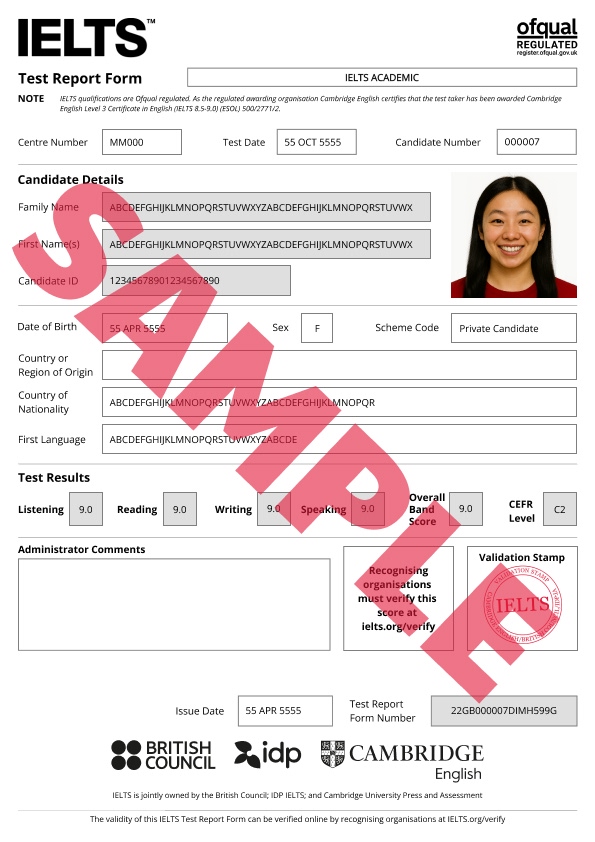
IELTS does not target a specific level; instead, it provides a score that reflects your overall proficiency (from B1 upwards). There is no pass or fail, unlike the Cambridge exams.
✅ IELTS Academic is particularly useful for university applications.
Preparing for and passing the First Certificate during secondary school is highly recommended, as it gives students a clear goal to aim for — even better if it’s the CAE!
At pre-university or university level, from around age 16 onwards, you should consider taking IELTS. It is widely accepted around the world and is the exam most universities recognise. Some universities do not accept Cambridge exams, but they do accept IELTS Academic.
✅ Exam structure
IELTS assesses four skills: Listening, Reading, Writing and Speaking. Since there is no dedicated grammar section, preparation is quicker.
The First Certificate and the CAE include a section called Use of English, which requires quite a lot of additional preparation.
In the IELTS Speaking test, each candidate is interviewed individually by an examiner. In the Cambridge exams the Speaking test is done in pairs.
✅ Dates, registration and results
If you take the IELTS on computer at Certify, you can choose from a wide range of dates, register up to 72 hours before the exam (subject to availability), and receive your results within 1–5 days.
🎯 And finally—did you know that IELTS is also a Cambridge exam?